

Blog by Douglas J. Lanzo
September 17, 2023
©2023
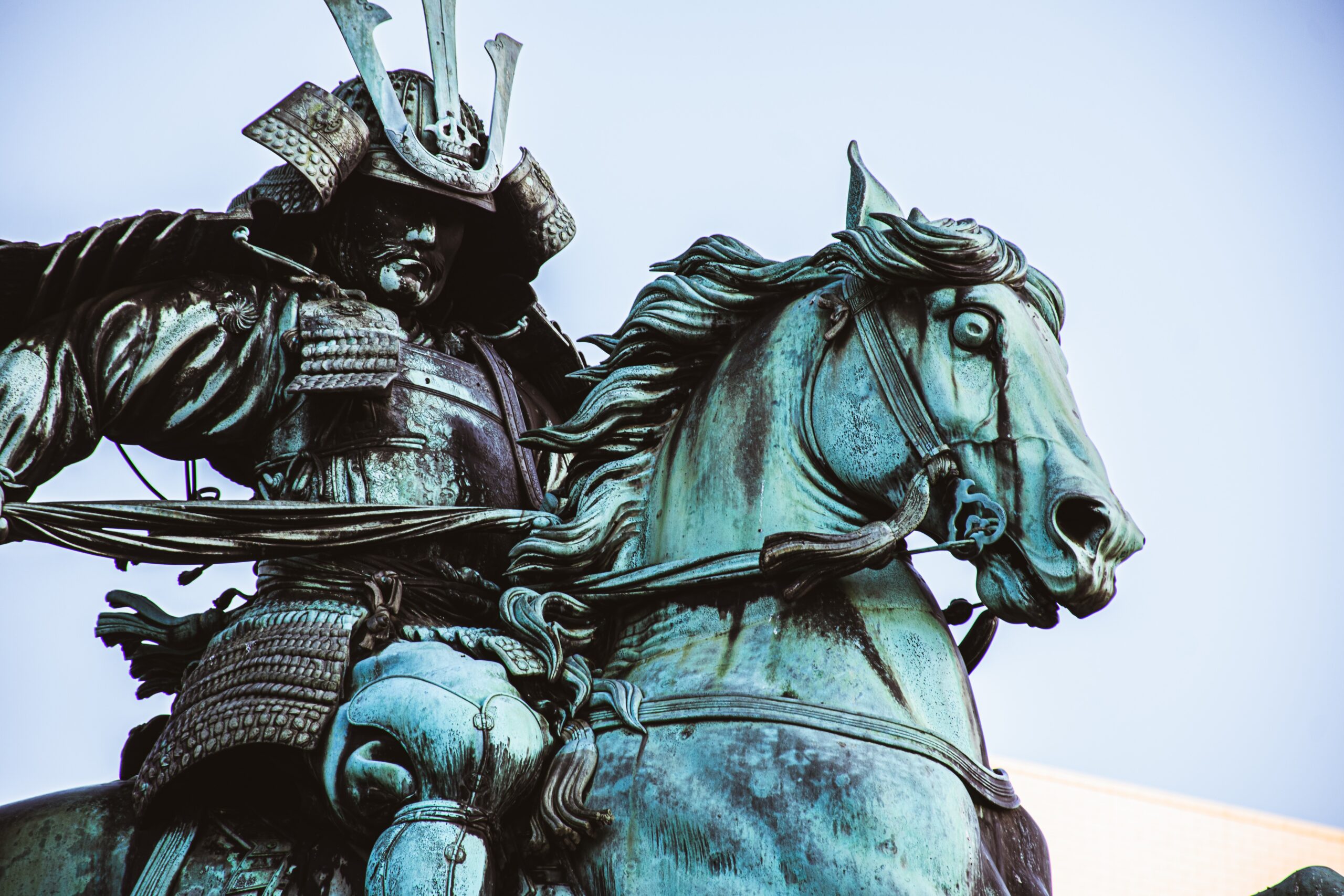
When we hear the word samurai, our first image may be that of a warrior clad in fearsome armor and wielding a deadly sword as he thunders on horseback across a bloody field of battle. Indeed, skill, honor and courage in battle up to the very sacrifice of a samurai’s life to protect his lord or protect his honor were enshrined in Bushido (the unwritten code of samurai ethics). However, so too were the virtues of tenderness, piety and love.
To help cultivate these virtues, samurai were trained in poetry and philosophy from an early age. Alongside fencing, archery, horsemanship, jiujutsu and mastering the sword and spear, the Bushido curriculum included ethics, literature, history and calligraphy. In all this training, the samurai learned to esteem character, rectitude and wisdom more highly than knowledge and recitation.
Instilling these virtues in samurai was regarded as a sacred vocation, in which character and the soul rather than intelligence and the head were chosen as the materials to develop. As Inazo Nitobe wrote in The Way of the Samurai (formerly titled The Soul of Bushido), “As without bones the head cannot rest on the top of the spine, nor hands move nor feet stand, so without rectitude neither talent nor learning can make of a human frame a samurai.”
Deep meaning and authenticity is found in Japanese poetry, including death poems written by samurai, princes and even an empress, such as the following death poem of Ouchi Yoshitaka, a samurai general who ruled the southernmost Japanese island of Kyushu before being captured by a rebelling general and forced to commit seppuku in 1551:
Both the victor
and the vanquished are
but drops of dew,
but bolts of lightning
Thus should we view the world.
A Japanese monk with samurai roots insisted on dying alongside his vanquished lord rather than retiring as a monk and wrote the following death poem:
The Sharp-edged sword, unsheathed,
cuts through the void.
Within the raging fire
a cool wind blows.
Japan’s most revered poet, Matsuo Bashō, came from a family of minor samurai and wrote haunting haiku about samurai and war, including:
Summer grass —
what’s left of
a brave warrior’s dream
Another striking war-related haiku by Bashō commemorates the death of a teenage boy, Atsumori, whose clan ruled Japan for years before being driven from Kyoto to Suma in 1182. Renowned for playing the flute, Atsumori touched the hears of listeners when he played his flute for them the night before an enemy attack. The next day, he was cut down by an enemy samurai after retrieving the beloved flute he had left behind in the chaos and confusion of battle.
In the shade of
green leaves to hear
his unblown flute
Yet another moving war-related poem authored by Bashō is the following, which is written in the context of a battle looming the next day where a samurai and his fellow warrior, Kosanda, anticipate that their forces will be overwhelmed and slain. Having vowed to fight and die for each other, the narrating samurai hands Kosanda a cup of sake to hold while he sings his final song.
Having Kosanda
hold my sake cup
one song to sing
Perhaps fittingly, the last samurai death poem in this piece was written at the end of the age of the samurai, who existed in Japan since the 10th century A.D. Samurai rose to power during the 12th century A.D. and played a dominant role in Japanese governance and society until the Meiji Restoration in 1868. Hijikata Toshizo, who rose from peasantry to become a samurai and vice-commander of his lord shogun’s forces, wrote the following death poem, entrusting it to his page to courier to safety after his battlefield fall in the shogun’s last stand against imperial forces at the end of the Boshin War:
Though my body may decay in the land of Ezo my spirit guards my lord in the East.
As exemplified by these poems, samurai and their admirers took poetry very seriously and preserved it for posterity. They wrote with sincerity, beauty and courage in the face of war, death and uncertainty. In particular, they prized haiku for their simplicity and brevity, which lent them to be readily appreciated by Japanese society regardless of class or education. In fact, samurai took haiku so seriously that it was feared that death would arise from the judging of haiku competitions featuring large numbers of samurai contestants. Specifically, the fear was that the “vanquished” samurai poets would experience such a deep sense of disgrace and dishonor that some might challenge the victors to duels by sword to the death. To avert this deadly consequence, samurai poems were meticulously judged by theme with only 2 samurai-authored poems being compared to each other. Fortunately, this thoughtful solution appears to have been worked.
Samurai lived by the Bushido code of ethics, encapsulated in the words of the Prince of Mito when he said (as related by Inazo Nitobe in The Way of the Samurai): “[I]t is true courage to live when it is right to live, and to die only when it is right to die.” The samurai were men of extraordinary character, integrity, culture, honor and courage. Fortunately for us as readers, admirers and writers of Japanese poetry, the wisdom and beauty of their words continue to resonate with us today as powerfully and authentically as they did during the golden age of the samurai.
Gregory Martin Pacific
Hi Doug: I found the blog to be very compelling and enlightening.