

By Douglas J. Lanzo
Copyright 2024
First published in Spirit Fire Review (Fall Issue, November 2024)
Stepping back centuries
into the homes and paths
of literary legends —
Louisa May Alcott,
Ralph Waldo Emerson, and
Henry David Thoreau —
I beheld the pageantry
of costumes, plays and stories,
that came to festive life
inside the wooden walls
of Alcott’s Orchard House,
a home for four sisters and
a stop on the road
to freedom for slaves “aboard”
the Underground Railroad,
where independent thought,
freedom, human dignity,
and suffrage for women,
were cherished and enshrined.
Witnessing in autumn
the transcendental beauty
of a tranquil kettle lake
carved by ancient glaciers,
I entered the tiny home
of Thoreau upon its banks —
an Abolitionist, whose
Civil Disobedience
inspired Mahatma Gandhi
and Martin Luther King, Jr.
to defy injustice
in enduring peaceful ways.
Retracing the footsteps
of patriots whose blood
helped to water the tree of
liberty in our nation,
I walked along lanterned roads
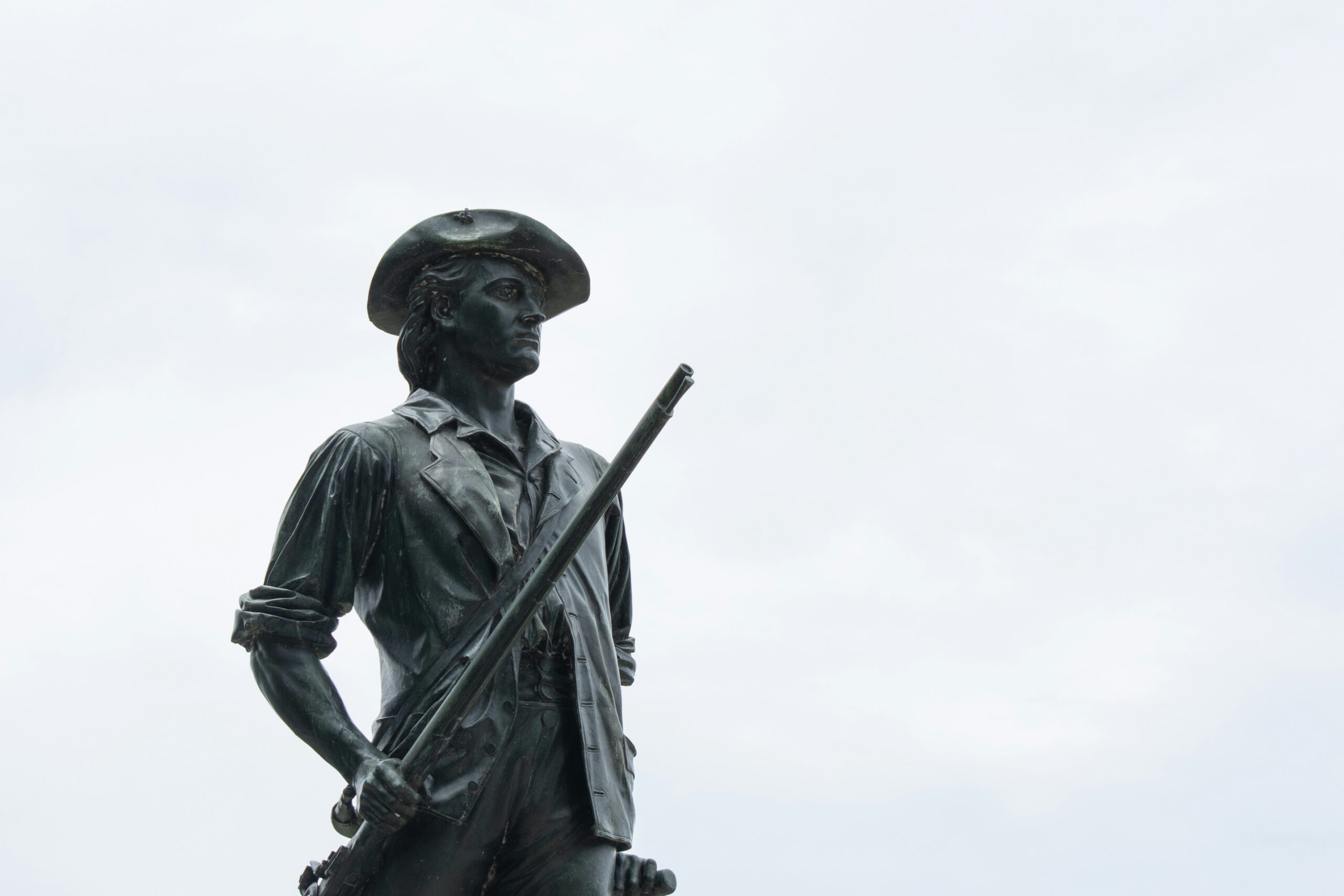
ridden by Paul Revere,
who spoiled British plans
to take Concord by surprise
and seize its munitions,
gazing at farmer’s fields
where Captain Isaac Davis —
a minuteman gunsmith
of high training standards and
even greater courage —
died leading his men
in the storied first battle
of our Revolution.
Warmed by gold-embered rays
of autumn’s fading sun,
I stood before the simple grave
of Louisa May Alcott —
a writer, Civil War nurse,
Abolitionist,
suffragist and pioneer —
buried next to her sisters,
her mother and her father.
The rough marble grave
was adorned by colorful pens,
a flag and some letters.
Kneeling down to read one,
I was struck by what it said:
“Thank you for contributing
to make me what I became.”
Only then did I grasp
the full greatness and import
of the lives of these heroes —
true patriots of Concord.